
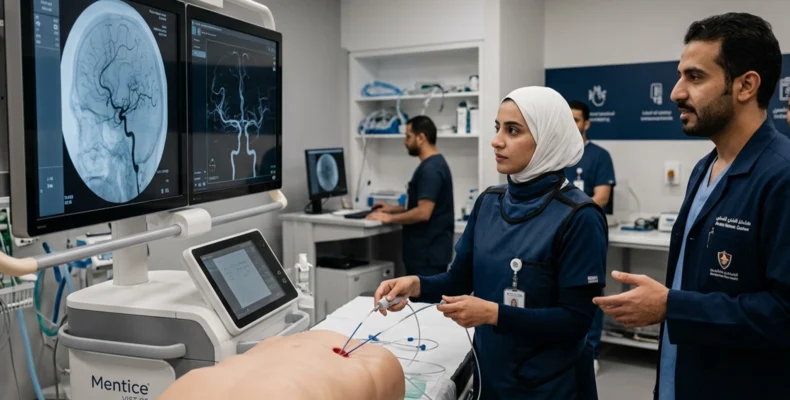
Over the last two decades, healthcare technology has advanced at an extraordinary pace — and healthcare technology education has become the single biggest factor in whether that pace translates into real clinical benefit. Devices that once seemed revolutionary have become routine, while entirely new therapeutic fields — robotic surgery, structural heart intervention, branched endovascular repair, mechanical thrombectomy, flow diversion, and image-guided hybrid procedures — continue to redefine what modern medicine can achieve.
Yet despite these advances, one reality has become increasingly clear: the success of advanced healthcare technologies depends less on the technology itself, and more on the level of knowledge surrounding its use.
In many institutions, the limiting factor is no longer access to devices. It is access to structured education, procedural understanding, and technical proficiency.
Technology evolves quickly. Human expertise evolves much more slowly.
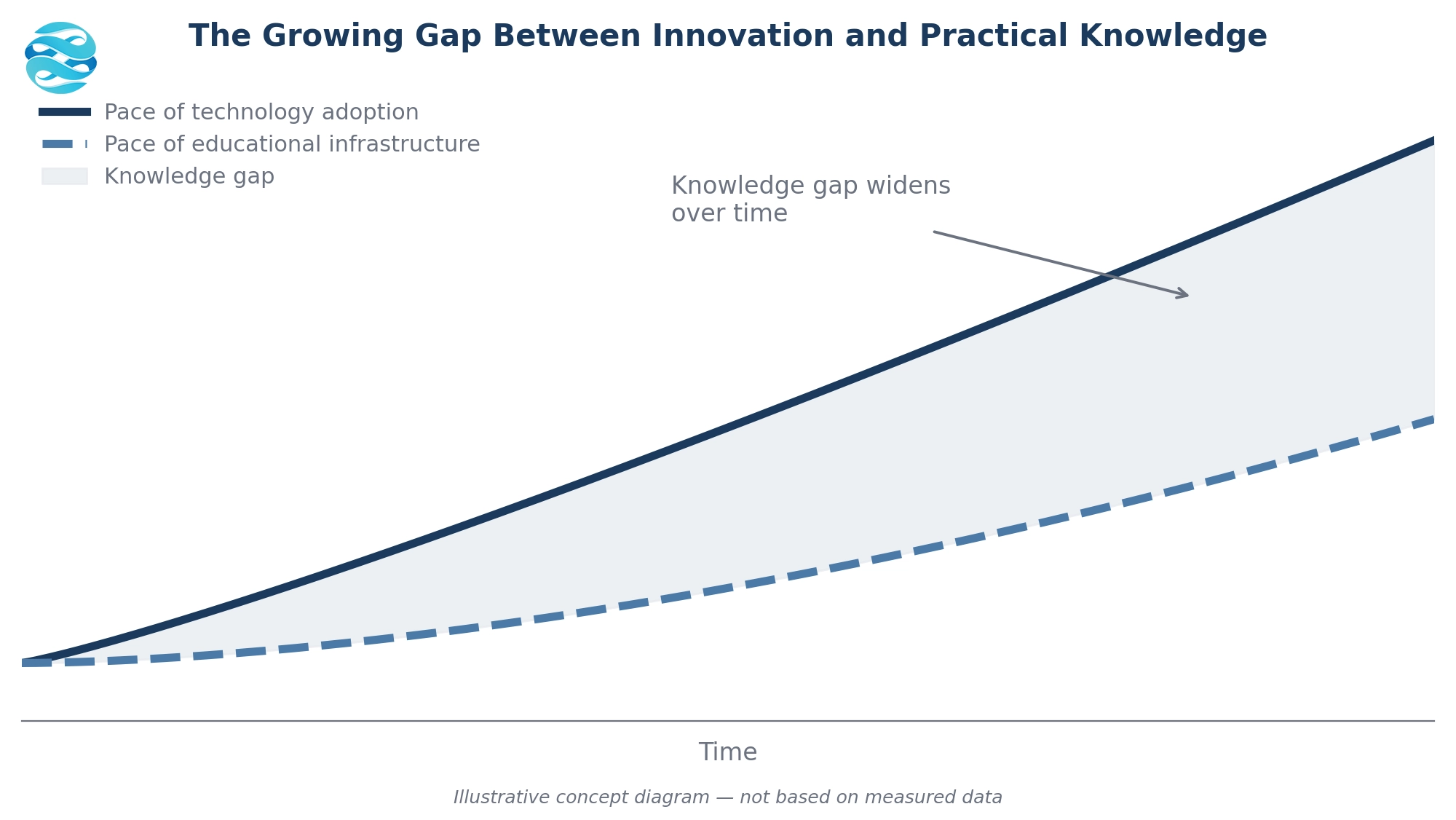
The Growing Gap Between Innovation and Practical Knowledge
Modern medical technologies are becoming increasingly sophisticated, but their complexity has also increased significantly. Devices today are no longer simple tools; they are integrated systems requiring advanced imaging interpretation, procedural planning, device-specific knowledge, troubleshooting capability, and coordinated multidisciplinary execution.
In many specialties, the learning curve has become steeper than ever before.
This creates a growing disconnect. New technologies may enter the market rapidly, but the educational infrastructure required to support safe and effective adoption often develops much more slowly. As a result, hospitals may acquire advanced technologies without fully developing the expertise needed to maximize their clinical value.
The greatest challenge in modern healthcare is no longer innovation itself — it is the safe translation of innovation into clinical practice.
Procedural Success Is Increasingly Knowledge-Dependent
In complex cardiovascular and endovascular therapies, procedural outcomes are becoming increasingly dependent on planning, interpretation, and intraoperative decision-making rather than purely technical execution alone.
Aortic interventions provide a clear example. Successful FEVAR, BEVAR, or arch repair requires:
- Advanced imaging analysis
- Precise sizing methodology
- Understanding of branch dynamics and sealing behavior
- Knowledge of bailout techniques and contingency planning
- Familiarity with device-specific characteristics
The same principle applies across many advanced therapies, from robotic surgery to structural heart intervention and neurovascular procedures.
The consequence is important: two operators may use the same device, yet achieve dramatically different outcomes based on differences in training, planning methodology, and procedural strategy.
In advanced medicine, expertise is increasingly becoming the true differentiator — not the technology itself.
Why Traditional Educational Models Are No Longer Enough
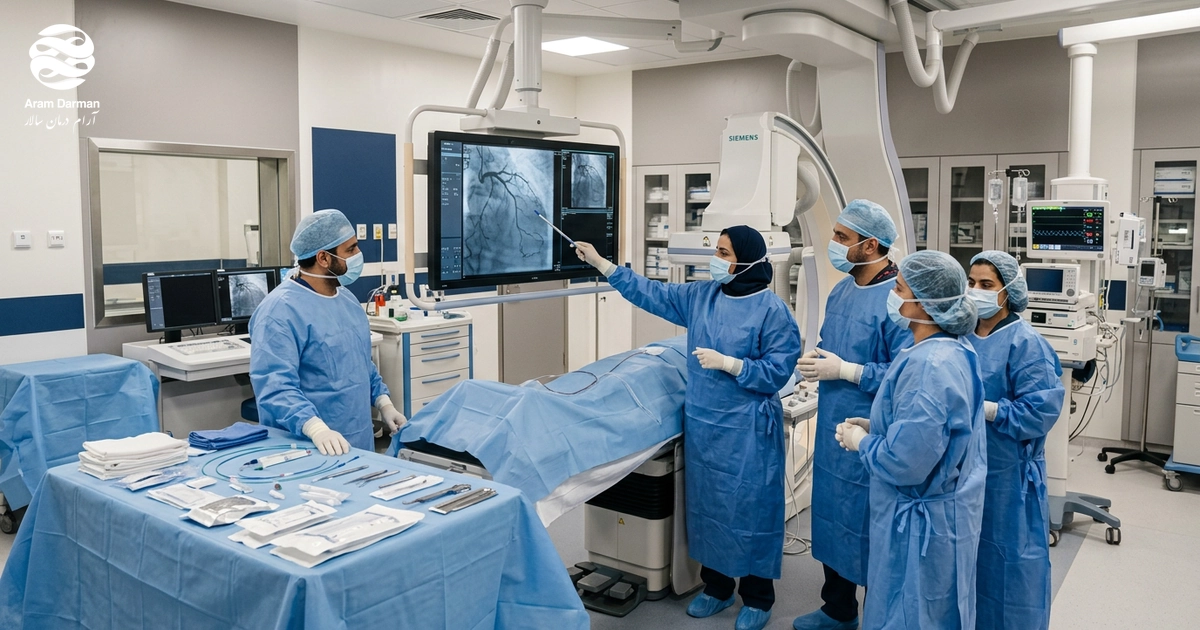
Historically, medical education relied heavily on apprenticeship models, conference attendance, and occasional industry workshops. While these remain valuable, they are no longer sufficient on their own.
The volume of technological evolution is simply too great.
Modern procedural education increasingly requires:
- Structured online learning pathways
- Case-based discussions
- Simulation-based training
- Hands-on workshops
- Continuous post-market technical support
- Longitudinal competency development
Most importantly, education can no longer be viewed as a single event occurring before adoption. It must become a continuous process integrated into the lifecycle of the technology itself.
The era of “install and train once” is rapidly disappearing.
The Relationship Between Education and Patient Safety
One of the most underestimated aspects of education is its direct relationship to patient safety.
Many complications associated with advanced technologies are not caused by device failure. They arise from:
- Improper patient selection
- Inadequate procedural planning
- Incomplete understanding of device behavior
- Failure to recognize evolving complications early enough
- Insufficient familiarity with bailout strategies
These are fundamentally educational gaps.
This is particularly relevant during the early phases of technology adoption, where teams are still progressing through the learning curve. In these settings, structured educational support can significantly reduce variability and improve procedural consistency.
In advanced healthcare technologies, education is not separate from patient safety — it is part of patient safety.
The Economic Impact of Education
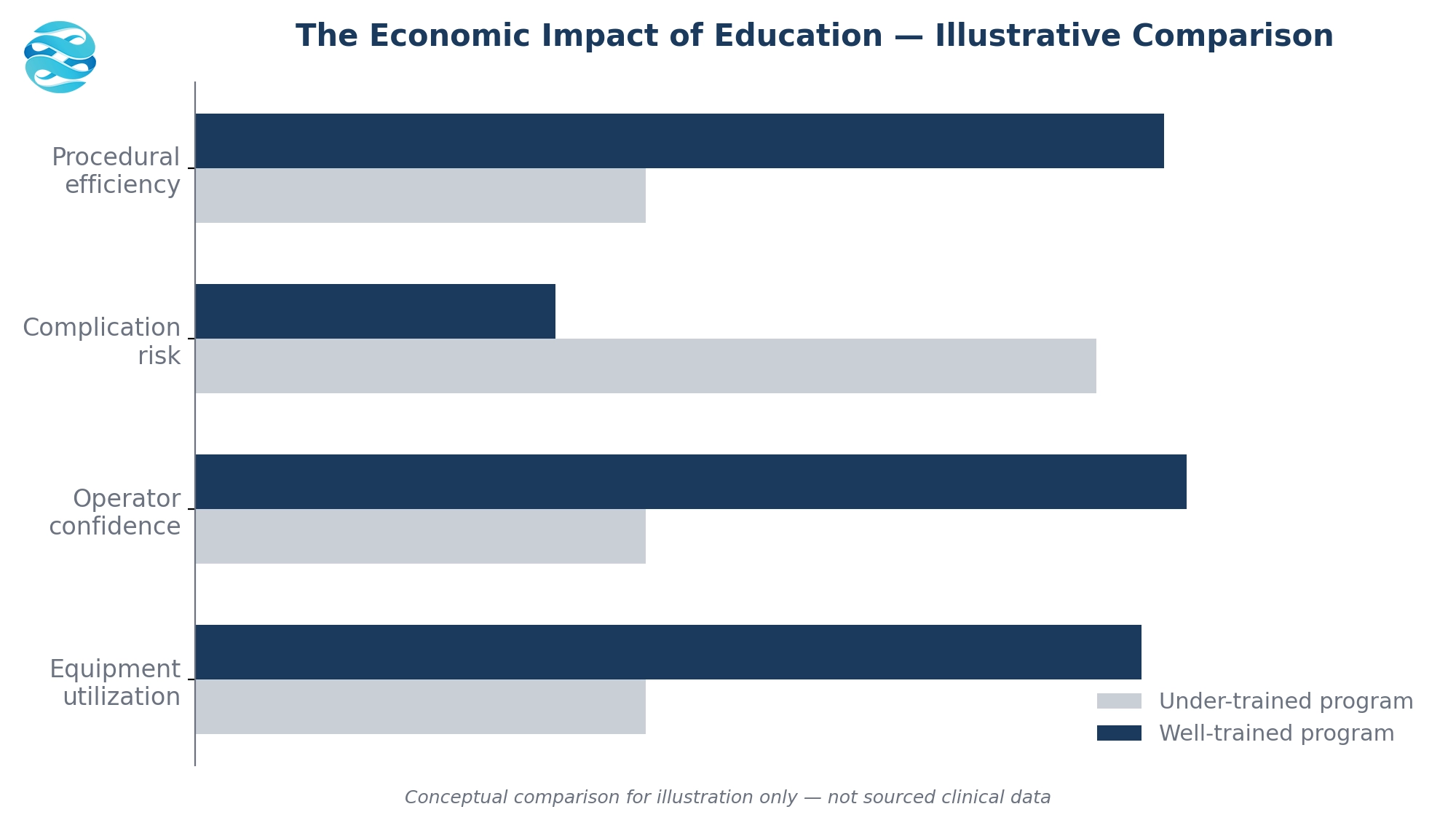
Education is often viewed as a cost center rather than a strategic investment. In reality, inadequate education is frequently far more expensive.
Poorly supported technologies tend to produce:
- Longer procedural times
- Higher complication rates
- Reduced utilization
- Lower operator confidence
- Program stagnation
- Underused capital equipment
Conversely, institutions that invest heavily in education and technical proficiency often achieve:
- Faster learning curve progression
- Higher procedural efficiency
- Better long-term outcomes
- Greater utilization rates
- Stronger institutional reputation
From a systems perspective, education directly influences both clinical performance and return on investment.
The value of advanced technology is ultimately limited by the expertise of the people using it.
The Expanding Role of Industry and Educational Platforms
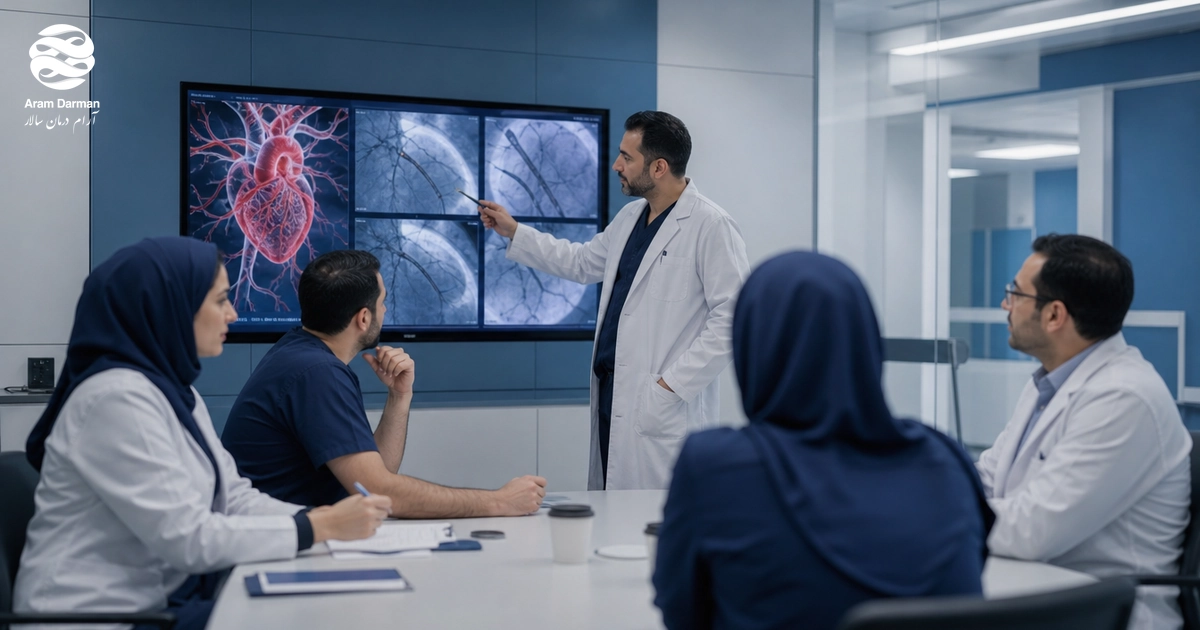
As technologies become more specialized, industry and independent educational platforms are playing an increasingly important role in procedural training and knowledge dissemination.
This represents an important evolution in healthcare education. Increasingly, high-level training is moving beyond traditional congresses into:
- Dedicated academies
- Structured online curricula
- Simulation laboratories
- Physician-led case libraries
- Multidisciplinary workshops
- Longitudinal certification pathways
Importantly, the strongest educational ecosystems are not purely promotional. They focus on practical knowledge transfer, complication management, procedural planning, and long-term clinical thinking.
The goal is no longer simply product familiarity. It is procedural maturity.
Why Healthcare Systems Are Reassessing Priorities
Many healthcare systems historically prioritized technology acquisition over educational infrastructure. Increasingly, that balance is changing.
Hospitals are beginning to recognize that:
- A well-trained team can maximize the value of existing technologies
- An undertrained team can underperform even with excellent devices
- Procedural reproducibility depends on structured knowledge transfer
- Long-term program success depends on continuous education
This shift is particularly visible in highly specialized fields such as structural heart intervention, advanced aortic therapy, neurointervention, robotic surgery, and complex peripheral vascular procedures.
The institutions achieving the best long-term outcomes are increasingly those investing not only in devices, but in expertise itself.
Closing Perspective
Advanced healthcare technologies will continue evolving rapidly. Devices will become smarter, procedures less invasive, and therapeutic possibilities broader than ever before.
But despite all technological progress, one principle remains unchanged: outcomes ultimately depend on the people using the technology.
Education therefore becomes more than training. It becomes infrastructure. It becomes risk management. It becomes quality assurance. And increasingly, it becomes one of the most important strategic investments a healthcare institution can make.
Because in the end, the most powerful technology in medicine is still human expertise.
Frequently Asked Questions
Why is healthcare technology education considered a strategic investment rather than a cost?
Because procedural outcomes, equipment utilization, and program reputation depend more on team expertise than on the device itself — under-trained teams underperform even excellent technology.
How does education affect patient safety in advanced procedures?
Many complications linked to advanced technologies stem from planning, patient selection, or bailout-strategy gaps — not device failure. Structured education directly reduces this variability.
What does continuous procedural education typically include?
Structured online learning, case-based discussion, simulation-based training, hands-on workshops, and ongoing post-market technical support — not a single training event before adoption.
Who is responsible for closing the education gap — manufacturers or hospitals?
Both. Industry and independent educational platforms are expanding their role, but institutions still need to build internal structured education into their own program lifecycle.